


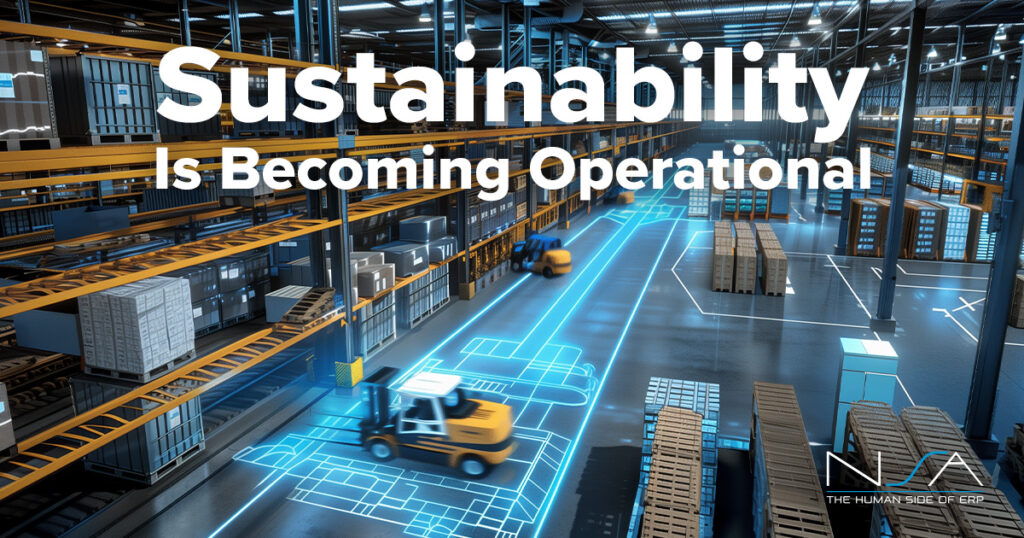
Sustainable distribution means minimizing the environmental and social impact of moving goods from producers to customers — not just transport emissions, but also storage, warehousing, packaging, documentation, and reverse logistics.
📦 1. Digitalization & Paperless Operations
Going digital is part of sustainability, not just efficiency:
- Eliminating paper-based processes (e-invoicing, digital purchase orders, EDI) reduces paper waste, printing energy, and physical storage needs — and cuts down logistical overhead tied to mailing docs.
- Digital workflows improve accuracy and speed, which reduces errors that often cause reprints, rescheduling, or expedited shipping — all of which carry environmental costs.
- Industry guidance on sustainable businesses explicitly cites going paperless and sending electronic correspondence as a common green practice.
Example: Replacing mailed invoices and POs with EDI or portal delivery can dramatically shrink your paper footprint while improving cash flow cycles.
🚚 2. Transportation Optimization
The biggest single sustainability gains in distribution come from smarter transport decisions:
- Network redesign and mode shifts — like moving freight from truck to rail — can cut carbon emissions significantly and reduce costs.
- Route optimization and load consolidation reduce empty miles and fuel usage. They require real-time data and advanced planning tools.
- Adoption of low-emission fleets (electric, hybrid, biofuel) is increasingly common for carriers and larger distribution partners.
🏭 3. Smarter Warehousing & Inventory
Warehouse activity — lighting, climate control, stock movement — also bears a sustainability cost:
- Digital warehouse management and IoT sensors improve space use and reduce unnecessary handling.
- Energy-efficient lighting and smart HVAC cut facility emissions and operating costs.
- Better inventory accuracy reduces overstocking and the energy tied to storing obsolete products.
📦 4. Packaging & Materials
Sustainable distribution often extends to how goods are packaged:
- Recyclable, biodegradable, or reusable packaging reduces landfill waste and cuts lifecycle emissions.
- Right-sizing packaging and minimizing fillers lowers transport weight and emissions.
🔁 5. Reverse and Circular Logistics
True sustainability considers returns and end-of-life for products and materials:
- Reverse logistics for returns, recycling, and refurbishment helps recapture value and reduce waste.
- Remanufacturing or repurposing returned goods supports circular economy goals and decreases demand for new materials.
🌱 Strategic & Broader Practices
Wholesalers leading in sustainability are also focusing on:
- Aligning sustainability with corporate strategy rather than ad-hoc projects.
- Setting science-based targets and reporting transparently on emissions and progress.
- Carbon offsetting and renewable energy investments, where appropriate.
🧠 In Summary
Sustainability in wholesale distribution is more than a buzzword — it’s a set of operational practices that deliver both environmental benefits and business value.
Key drivers include:
- Digital operations (paperless workflows and e-documents)
- Transport optimization (routes, modes, consolidation)
- Warehouse efficiency (technology, energy, inventory)
- Sustainable packaging
- Reverse logistics and circular practices
- Strategic environmental goal-setting
Together, these practices reduce waste, lower carbon emissions, cut costs, and improve resilience across the distribution ecosystem.